


Autoclave molding is an advanced manufacturing method for high-performance composite materials. It cures composite layups inside a specialized pressure vessel — the autoclave — under precisely controlled heat and pressure. The result is a dense, low-void part with exceptional strength-to-weight ratio, making autoclave molding the preferred process for critical aerospace structures, high-performance automotive components, and other demanding applications where material quality cannot be compromised.
What is autoclave molding?
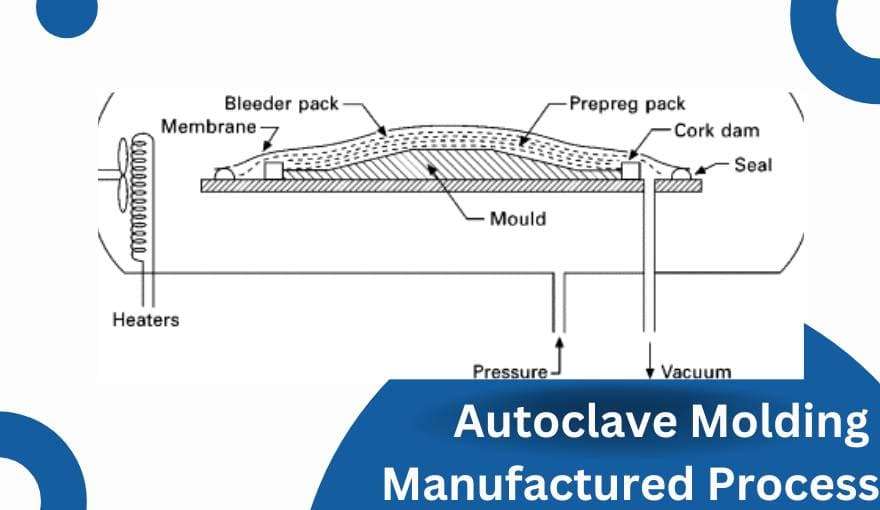
Autoclave molding is a process for manufacturing advanced composite parts inside a large, sealed pressure vessel. Raw composite materials — typically a reinforcement such as carbon fiber pre-impregnated with a resin matrix — are laid up in a mold, sealed under vacuum, and placed in the autoclave. Controlled heat softens the resin and initiates cure, while high pressure compresses the laminate layers, drives out entrapped air, and consolidates the material into a strong, dense product with minimal voids or defects.
This method is recognized for producing composite parts with low porosity and highly consistent mechanical properties. It is the dominant process for high-strength, low-weight applications in aerospace, where reducing structural weight without sacrificing strength is essential. Aircraft wings, fuselages, and control surfaces are among the most common autoclave-molded components.
What is the history of autoclave molding?
Autoclave molding has been used in composite manufacturing for decades. Its origins trace back to the 1960s, but the technology expanded rapidly during the 1980s, driven by the aerospace and defense sectors’ growing demand for strong, lightweight structural materials.
A pivotal development during this period was the introduction of prepreg materials — composite fibers pre-impregnated with a partially cured resin matrix. Prepregs standardized the lay-up process, improved consistency, and made autoclave molding more practical for production environments. This advance opened the door to widespread adoption across the aerospace industry.
NASA demonstrated the potential of autoclave molding in the 1980s by using the process to manufacture the space shuttle’s payload bay doors, components that required extreme strength combined with minimal weight. This high-profile application validated autoclave molding as a reliable process for the most demanding structural uses.
Since then, autoclave molding has become a cornerstone of high-performance composite manufacturing, particularly for parts requiring a high strength-to-weight ratio in aerospace and automotive applications.
How does autoclave molding work?
The autoclave molding process involves several key steps:
- Material Preparation: The process begins with prepregs — composite materials made from fibers pre-impregnated with resin. Sheets are cut to the required shape and laid into the mold in a specific sequence determined by the part’s design. The fiber arrangement (unidirectional, woven, multiaxial, etc.) is carefully defined because it directly determines the mechanical properties of the finished part.
- Mold Setup: The prepreg stack is placed within a mold, typically consisting of a rigid lower tool and a flexible upper half made from high-temperature rubber or polymer film. A release film is applied to the mold surface to prevent adhesion. Additional materials such as cores, inserts, or caul plates are positioned as required by the design.
- Vacuum and Sealing: Once the layup is complete, the mold is sealed inside a vacuum bag. A vacuum is drawn to remove entrapped air and volatiles from the laminate before curing begins. This step is critical for minimizing voids in the final part.
- Autoclave Curing: The bagged mold is loaded into the autoclave. Heat — typically in the range of 120°C to 200°C depending on the resin system — reduces resin viscosity and drives the cure reaction, allowing full fiber wet-out. Simultaneously, pressure of 50–100 psi consolidates the laminate, removes remaining voids, and ensures a dense, well-bonded structure. The cure cycle is programmed with controlled temperature ramps, dwell periods, and pressure holds tailored to the specific material system.
- Cooling and Demolding: After the cure cycle is complete, the autoclave is cooled at a controlled rate to avoid thermal stresses in the part. Once the temperature is sufficiently low, the autoclave is opened, the vacuum bag is removed, and the cured composite part is demolded.
- Post-Processing: The part is trimmed to final dimensions, excess flash is removed, and a thorough quality inspection is performed. Depending on the application, some parts may require oven post-curing to achieve optimal resin properties, followed by surface finishing such as painting or coating.
What are the major components of an autoclave system?
The autoclave molding equipment is specially designed to ensure the adequate curing of composite materials under controlled heat and pressure. The major components include:
- Autoclave Vessel: The core of the system is a large, thick-walled pressure vessel constructed from steel or stainless steel, engineered to withstand sustained high pressure and temperature. Vessel sizes vary widely — from compact laboratory units around 0.5 meters in diameter to production autoclaves exceeding 10 meters in length and 3 meters in diameter, capable of accommodating full-scale aerospace structures such as fuselage sections or wing panels.
- Heating System: Electric resistance heaters raise the vessel interior to the temperatures required for resin cure. The heaters are arranged to ensure even heat distribution throughout the chamber, with typical temperature capabilities ranging from 180°C to 260°C for standard aerospace-grade resin systems.
- Pressure System: Pressure is applied to the part during curing by pumping compressed air or nitrogen into the vessel. This pressure compresses the composite layers, drives out entrapped voids, and consolidates the laminate. Standard industrial autoclaves offer pressure capabilities from 50 psi to 200 psi.
- Vacuum System: Before entering the autoclave, the composite layup is sealed inside a vacuum bag. The autoclave’s integrated vacuum system maintains suction throughout the cure cycle, helping to remove volatiles and residual air from the laminate and further reducing void content in the finished part.
- Control System: Modern autoclaves are managed by advanced computer control systems that precisely regulate temperature, pressure, and vacuum throughout the cure cycle. These systems monitor all parameters in real time, make automatic adjustments to maintain conformance with the programmed cure profile, and log data for quality assurance and traceability.
- Safety Features: Given the high pressures and temperatures involved, autoclaves incorporate multiple safety systems including pressure relief valves, emergency shutdown circuits, and door interlocks that physically prevent the vessel from being opened while pressurized.
- Gas Circulation and Inert Gas System: Most autoclaves circulate heated gas internally to maintain uniform temperature distribution across the load. For materials or processes where oxidation at elevated temperatures is a concern, the vessel can be purged and filled with inert nitrogen gas rather than air.
What are the advantages of autoclave molding?
Autoclave molding offers significant advantages over other composite manufacturing methods:
- Reduced Waste: The use of prepreg materials and a controlled curing environment minimizes trim and flash generation compared to hand layup methods. Material savings of up to 30% relative to traditional wet layup processes have been documented in production environments.
- High Uniformity: Controlled pressure and temperature ensure that resin flows evenly and fully impregnates the reinforcement fibers, producing parts with highly consistent mechanical properties throughout the laminate. This uniformity is essential in aerospace applications, where structural reliability is non-negotiable.
- Better Interlaminar Adhesion: High autoclave pressure compresses the individual plies together during cure, promoting strong bonding between layers and significantly improving interlaminar shear strength. This enhanced adhesion is critical for preventing delamination under cyclic or impact loading.
- Superior Mechanical Properties: The combination of high pressure and controlled temperature allows autoclave-molded parts to achieve high fiber volume fractions and very low void content, which translates directly into excellent strength and stiffness. These properties are particularly valuable in weight-critical structural applications.
- Higher Quality and Consistency: The autoclave’s controlled environment reliably suppresses defects such as voids and dry spots, producing parts with fewer rejections and more consistent quality across production batches. This is especially important in regulated industries such as aerospace and medical devices.
- Lower Unit Costs at Scale: While the capital cost of an autoclave is substantial, the ability to cure multiple parts simultaneously in large production autoclaves, combined with reduced material waste and post-processing requirements, can lower per-part costs significantly in high-volume production.
- Rapid Prototyping: Autoclave molding can produce prototype parts that closely match the quality and properties of final production components, enabling meaningful functional testing and design validation early in the development process — before committing to full-scale production tooling.
- Lightweight Structures: Autoclave-molded composites offer far superior strength-to-weight ratios compared to traditional structural metals like steel or aluminum. In the automotive sector, carbon fiber composite body panels and structural members made via autoclave molding deliver meaningful weight reductions that improve fuel efficiency and dynamic performance.
- Enhanced Process Control: The ability to program complex cure cycles — with multiple temperature ramps, pressure holds, and dwell periods — allows the process to be precisely tailored to the requirements of specific resin systems and part geometries, enabling manufacturers to optimize final material properties for each application.
What are the disadvantages of autoclave molding?
Despite its many advantages, autoclave molding also has significant drawbacks:
- High Initial Investment: Industrial autoclaves are complex, precision-engineered pressure vessels that can cost several million dollars. This capital expenditure, combined with the additional investment required for molds, control systems, vacuum infrastructure, and trained operators, creates a substantial barrier to entry for smaller manufacturers.
- Size Limitations: While autoclaves are available in a wide range of sizes, there is a practical upper limit to vessel dimensions. Very large parts — such as wind turbine blades or full ship hull sections — often exceed the capacity of even the largest production autoclaves, limiting the applicability of the process for certain applications.
- High Energy Consumption: Heating and pressurizing a large autoclave vessel consumes considerable energy, raising operating costs and increasing the environmental footprint of the process. As industries face growing pressure to reduce carbon emissions, autoclave molding’s energy intensity is an increasingly relevant concern.
- Slow Cycle Times: Autoclave molding is inherently slower than many alternative composite processes. Heating the vessel, holding at cure temperature, and cooling back to a safe demold temperature can collectively require several hours per cycle, limiting throughput compared to processes such as injection or compression molding.
- Complex Mold Design: Autoclave tooling must withstand repeated exposure to high pressure and temperature, often requiring specialist metal alloys and precision machining. Mold designers must also account for the thermal expansion behavior of both the tool material and the composite laminate to ensure dimensional accuracy in the finished part.
- Skilled Labor Requirement: Preparing composite layups and operating autoclave equipment demands a high level of skill and training. Errors in ply orientation, vacuum bagging integrity, or cure cycle programming can result in costly part rejections. Recruiting and retaining qualified composites technicians remains a challenge for many manufacturers.
- Material Cost: Prepreg materials are considerably more expensive than dry fiber alternatives and require cold storage at approximately -18°C to prevent premature resin cure. Limited shelf life — typically 6 to 12 months — adds further cost and logistical complexity to the supply chain.
- Limited Post-Processing Options: The high fiber volume fraction and fully cured resin matrix of autoclave-molded parts can make secondary machining operations — such as drilling, trimming, or bonding — more difficult compared to parts made by other methods, often requiring specialized tooling and careful process control.
What are the materials used in autoclave molding?
A wide variety of composite materials can be processed via autoclave molding, typically based on a thermoset polymer matrix reinforced with continuous fibers.
Prepreg Materials
Prepregs are the most common feedstock for autoclave molding. They consist of reinforcement fibers pre-impregnated with a partially cured thermoset resin, supplied in roll or sheet form ready for lay-up. Common resin systems include:
- Epoxy: The most widely used resin in aerospace and industrial applications, offering an excellent combination of mechanical performance, adhesion, and environmental resistance.
- Phenolic: Selected for interior aircraft components due to outstanding fire, smoke, and toxicity (FST) performance.
- Bismaleimide (BMI): Used in high-temperature aerospace and automotive applications where service temperatures exceed the capability of standard epoxy systems.
- Polyimide: Provides exceptional thermal stability and chemical resistance for extreme-temperature environments.
The reinforcement in prepregs is typically one of the following:
- Carbon fiber: Delivers the highest strength-to-weight ratio and stiffness, making it the standard choice for aerospace, high-performance automotive, and sporting goods.
- Glass fiber: More economical than carbon fiber, with good strength and electrical insulation properties, widely used across industrial applications.
- Aramid fiber (Kevlar, Nomex): Exceptional tensile strength combined with outstanding impact and ballistic resistance, used in aerospace and protective applications.
Prepregs are available in unidirectional tapes, woven fabrics, and multiaxial non-crimp fabrics. The form and fiber orientation are selected based on the structural requirements of the part.
A key advantage of prepregs is their precisely controlled resin-to-fiber ratio, which ensures consistent properties in the finished laminate. The tacky surface of prepreg sheets also aids lay-up by helping individual plies adhere to one another before cure.
The principal disadvantages of prepregs are their higher cost compared to dry fiber alternatives, the requirement for cold storage at approximately -18°C, and a limited shelf life of typically 6 to 12 months before the resin begins to degrade.
Dry Fiber Materials
Dry fiber reinforcements are sometimes used in autoclave molding, particularly in combination with liquid resin infusion processes such as resin transfer molding (RTM) or vacuum-assisted resin transfer molding (VARTM). In these approaches, dry fabric is laid into the mold, liquid resin is infused under vacuum or pressure, and the part is then cured in the autoclave. Dry fibers offer longer shelf life and do not require cold storage, but the infusion process is more complex and more susceptible to defects such as dry spots or resin-rich zones.
Core Materials
Many autoclave-molded parts incorporate lightweight core materials sandwiched between composite face sheets to increase panel thickness and bending stiffness without a significant weight penalty. Common core materials include:
- Honeycomb: Available in aluminum, aramid (Nomex), or thermoplastic, offering high shear strength and an excellent stiffness-to-weight ratio.
- Structural foam: Polyurethane, PVC, and syntactic foams are used where insulation, buoyancy, or increased thickness is required.
- Balsa wood: A natural option with good compressive properties, used primarily in marine and wind energy applications.
Adhesive Films
Thin sheets of partially cured adhesive film are commonly used between composite plies or between the composite skin and core material. During the autoclave cure cycle, these films melt and bond the interfaces together, significantly improving interlaminar shear strength and fatigue resistance in the finished assembly.
What are the challenges in producing high-precision autoclave molding?
Producing high-precision autoclave molded parts is technically demanding, and the aerospace and automotive industries impose strict quality requirements that make the following challenges particularly significant:
- Mold Design and Fabrication: Autoclave tooling must endure repeated thermal cycling under high pressure, necessitating specialist metal alloys and precision machining. Mold designers must account for the differential thermal expansion between the tool and the composite laminate to maintain dimensional accuracy. Complex part geometries with undercuts, tight radii, or thin walls add further difficulty and cost to the tooling design process.
- Fiber Placement and Orientation: Precise control of fiber orientation throughout the layup is critical to achieving the intended structural properties. Wrinkles, bridging, or misaligned plies introduce local stress concentrations that can significantly reduce part strength. While automated fiber placement (AFP) machines improve placement consistency, they represent a substantial additional investment and are limited in the geometries they can address.
- Resin Flow and Distribution: For the composite to achieve its designed properties, resin must flow evenly and completely wet all fiber surfaces during cure. Resin viscosity, reinforcement permeability, and the pressure gradients within the mold all influence flow behavior. Insufficient flow produces dry spots; excessive flow can create resin-rich regions or contribute to void formation.
- Temperature and Pressure Uniformity: Maintaining uniform temperature and pressure throughout the autoclave — particularly for large or geometrically complex parts with varying thicknesses — is technically challenging. Non-uniform curing can introduce residual stresses, warpage, or inconsistent material properties across the part.
- Void and Porosity Control: Voids and porosity, caused by entrapped air, resin volatiles, or insufficient consolidation pressure, reduce the mechanical performance of the finished composite and can initiate fatigue cracks. Although high autoclave pressure suppresses void formation, achieving consistently low void content in thick-section or complex-geometry parts requires careful process optimization.
- Dimensional Accuracy and Tolerances: Many aerospace and automotive applications require autoclave-molded parts to meet tight dimensional tolerances. Thermal expansion and contraction of the tool and laminate during the cure cycle, combined with resin shrinkage on cure and springback upon demolding, all contribute to dimensional deviation. Managing these effects demands careful mold compensation and process control.
- Quality Control and Inspection: Subsurface defects such as voids, porosity, and delaminations are not visible to the naked eye and require advanced non-destructive testing methods — including ultrasonic C-scan and X-ray computed tomography — to detect reliably. These inspection techniques are time-consuming and add to the overall cost of the process.
- Cost and Scalability: The high capital cost of autoclaves and tooling, combined with expensive prepreg materials and relatively slow cycle times, makes autoclave molding economically challenging at low production volumes. Scaling up production requires investment in larger vessels and more complex tooling, further increasing costs.
Despite these challenges, autoclave molding remains the process of choice for critical composite structures in aerospace and high-performance automotive applications. Ongoing research in resin chemistry, automated fiber placement, and process simulation continues to improve the efficiency, reliability, and cost-effectiveness of the technology.
What are the applications of autoclave molding?

Autoclave molding is used across a wide range of industries to produce high-performance, lightweight composite structures.
1. Aerospace Industry
Aerospace remains the primary application domain for autoclave molding, encompassing both commercial and military aircraft as well as spacecraft. Typical components include:
- Wing and tail structures
- Fuselage sections
- Control surfaces — flaps, ailerons, elevators, and rudders
- Engine nacelles and thrust reversers
- Interior structures including floor panels, overhead bins, and seat frames
The Boeing 787 Dreamliner is approximately 50% composite by weight, with major structural sections including the wings and fuselage manufactured from autoclave-cured carbon fiber prepregs.
2. Automotive Industry
While less prevalent than in aerospace, autoclave molding is increasingly used in high-performance and motorsport applications where the superior properties of autoclave-grade composites justify the cost. Applications include:
- Body panels and structural components for supercars and racing vehicles
- Monocoque chassis and safety cells
- Suspension components including wishbones and leaf springs
- High-performance brake system components
Formula 1 teams and manufacturers such as McLaren and Lamborghini use autoclave-molded carbon fiber composites for structural chassis components where weight and stiffness are paramount.
3. Marine Industry
High-performance boats and racing yachts use autoclave molding to produce lightweight, stiff, and corrosion-resistant hull and deck structures. Typical applications include:
- Hull and deck skins for racing yachts and performance powerboats
- Masts and spars for sailing vessels
- Bulkheads and interior structural panels
4. Sports Equipment
Premium sports equipment relies heavily on autoclave-molded carbon fiber composites to deliver performance advantages. Examples include:
- Golf club shafts and driver heads
- Tennis and badminton racket frames
- Road and track bicycle frames and components
- Skis, snowboards, and poles
Autoclave-molded carbon fiber frames have become standard in professional road cycling, enabling ultra-lightweight, stiff structures that would be impossible to achieve in metal.
5. Medical Industry
Autoclave molding is used to manufacture demanding medical devices and equipment, including:
- Prosthetic limb structures and orthotic devices
- Radiolucent imaging equipment components for MRI and CT environments
- Surgical instruments requiring high strength and low weight
6. Energy Industry
The energy sector uses autoclave-molded composites in applications including:
- Wind turbine blade skins and structural elements
- Tidal and marine current turbine blades
- High-pressure composite overwrapped pressure vessels (COPVs)
7. Recreational Vehicles
High-end RVs, caravans, and motorhomes incorporate autoclave-molded composites to reduce structural weight while improving rigidity and longevity:
- Lightweight body panels and roof structures
- Interior cabinetry and furniture panels
As composite material technology continues to advance and process costs gradually decline, autoclave molding is expected to extend into additional industries where the performance advantages of high-quality composite structures can be realized.
What is the difference between autoclave and oven composites?
Both autoclave and oven curing are used to manufacture composite parts, but they differ in process conditions and the properties achievable in the final product.
Autoclave Composites
As described throughout this article, autoclave molding cures composite layups inside a pressurized, heated vessel. The defining characteristics of autoclave-cured composites include:
- High Pressure: 50–100 psi (345–690 kPa) applied throughout the cure cycle, compressing the laminate, removing voids, and consolidating the plies.
- Precise Temperature Control: Advanced closed-loop control systems maintain the programmed cure temperature with high accuracy, ensuring consistent resin cure and repeatable material properties.
- Vacuum Bagging: The layup is sealed under vacuum before and during autoclave curing, removing air and volatiles from the laminate prior to consolidation under pressure.
- High Fiber Volume Fraction: The combination of vacuum and pressure allows fiber volume fractions of 60–70% to be achieved routinely, contributing to the superior stiffness and strength of autoclave composites.
- Low Void Content: Autoclave-molded parts typically exhibit void content below 1%, ensuring optimal mechanical performance and fatigue resistance.
Oven Composites
Out-of-autoclave (OOA) or oven curing processes cure composite layups in a conventional oven without the application of external pressure. The key characteristics are:
- Atmospheric Pressure: Curing takes place at ambient pressure, meaning the laminate relies solely on vacuum (if applied) for consolidation rather than mechanical compression.
- Optional Vacuum Bagging: Vacuum bagging may or may not be used for oven-cured parts. Where applied, it aids consolidation and removes some entrapped air, but without the additional compaction provided by autoclave pressure.
- Lower Fiber Volume Fraction: Without high external pressure, oven-cured parts typically achieve fiber volume fractions of 50–60%, somewhat lower than autoclave-processed parts.
- Higher Void Content: Void content in oven-cured composites typically ranges from 2–5%, which can reduce strength and fatigue performance compared to autoclave equivalents.
- Longer Cure Cycles: Oven-cured composites often require extended, lower-temperature cure cycles to achieve adequate resin conversion without the benefit of pressure-assisted consolidation.
The choice between autoclave and oven curing depends on the performance requirements, part size, and production economics of a given application. For high-stress structural components in aerospace and high-performance automotive applications, the superior consolidation and mechanical properties of autoclave molding justify its higher cost and complexity. Oven curing, by contrast, is well suited to larger parts, higher production volumes, and applications where the slightly reduced mechanical properties are acceptable — including many marine, sports equipment, and industrial applications.
Advances in resin chemistry and OOA processing techniques — including purpose-designed low-viscosity resin systems, improved vacuum infusion methods, and compression molding — have progressively narrowed the performance gap between oven-cured and autoclave-cured composites. Nevertheless, for the most demanding structural applications, autoclave molding continues to set the benchmark for composite part quality and reliability. Both processes are expected to remain important in composite manufacturing, with selection driven by the specific requirements and economics of each application.
Frequently Asked Questions
What is autoclave molding?
Autoclave molding is a manufacturing process for high-performance composite parts inside a sealed pressure vessel. Pre-impregnated reinforcement fibers (prepregs) are laid into a mold, sealed under vacuum, and cured under controlled heat (120–200°C) and pressure (50–100 psi). The result is a dense, low-void composite with exceptional strength-to-weight ratio.
What are the major components of an autoclave system?
The system consists of a thick-walled steel pressure vessel, electric resistance heaters, a compressed air or nitrogen pressure system, an integrated vacuum system, and a computer control system that regulates temperature, pressure, and vacuum throughout the cure cycle. Safety features include pressure relief valves and door interlocks.
What are the advantages of autoclave molding?
Autoclave molding produces parts with high fiber volume fractions (60–70%), very low void content (<1%), and highly consistent mechanical properties. It offers better interlaminar adhesion, reduced material waste (up to 30% savings vs. wet layup), lower unit costs at scale, and the ability to cure multiple parts simultaneously in large production vessels.
What are the disadvantages of autoclave molding?
The primary drawbacks include high capital investment (several million dollars per vessel), significant energy consumption, slow cycle times (several hours per part), complex mold design requirements, size limitations for very large structures, and the high cost of prepreg materials that require cold storage at approximately -18°C.
What materials are used in autoclave molding?
Prepregs are the most common feedstock — typically carbon fiber, glass fiber, or aramid fiber pre-impregnated with epoxy, phenolic, bismaleimide (BMI), or polyimide resin. Many parts also incorporate lightweight core materials such as honeycomb, structural foam, or balsa wood, bonded with adhesive films during cure.
What are the main applications of autoclave molding?
The primary applications include aerospace structural components (wings, fuselages, control surfaces), high-performance automotive parts (body panels, monocoque chassis, suspension), marine hulls and masts, premium sports equipment (bicycle frames, golf clubs), medical devices, and wind turbine blades.
What is the difference between autoclave and oven curing?
Autoclave curing applies 50–100 psi of pressure during cure, achieving fiber volume fractions of 60–70% and void content below 1%. Oven curing (out-of-autoclave) relies on vacuum alone at atmospheric pressure, typically producing 50–60% fiber volume and 2–5% void content. Autoclave parts offer superior mechanical properties but at higher cost and complexity.
Request a B2B Manufacturing Quote – Share your profile, rebar, machine, or die requirements and we will return specifications, lead time, and export pricing. Contact IncomePultrusion for a project quote.

