


Last updated: September 2026
Project specifications often call for curved reinforcement sections, leaving engineers and contractors questioning whether fiberglass rebar can accommodate these requirements. The assumption that GFRP behaves like steel during bending operations leads to costly failures. Based on extensive field experience with GFRP installations, this guide provides the technical framework for bending fiberglass rebar safely and effectively.
Direct Answer: Bend Fiberglass Rebar – Yes, With Critical Limitations
Fiberglass rebar can be bent, but requires adherence to strict technical parameters and specialized procedures. Unlike steel rebar’s ductile behavior, GFRP exhibits brittle characteristics that can result in 40-60% strength reduction when bent improperly. Successful bending operations depend on understanding material limitations, following manufacturer specifications, and employing appropriate equipment and techniques.
B2B GFRP rebar supply: Specifications, mill certs, and export quotes on our FRP rebar manufacturer page.
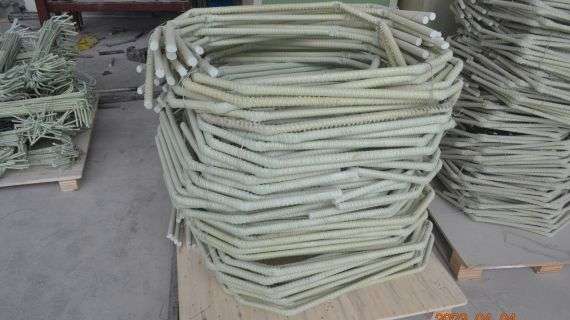
Professional fiberglass rebar bending equipment and pre-bent GFRP reinforcement products
Understanding GFRP Material Properties for Bending Applications
GFRP rebar consists of continuous glass fibers in a thermosetting polymer matrix, creating a composite with fundamentally different mechanical properties than steel reinforcement. Understanding these characteristics is essential for proper bending operations.
Critical Material Properties:
- Tensile Strength: 600-1,200 MPa (2-3 times steel capacity)
- Density: 1.25-2.1 g/cm³ (approximately 75% lighter than steel by weight)
- Corrosion Resistance: Immune to chloride attack and chemical degradation
- Electrical Conductivity: Non-conductive (resistivity >10¹² ohm-cm)
- Thermal Expansion: 6-10 × 10⁻⁶/°C (compatible with concrete)
The fundamental difference lies in material behavior: steel exhibits ductile deformation with a yielding phase, while GFRP remains elastic until brittle failure occurs. This eliminates the plastic deformation zone that makes steel forgiving during bending operations.
Bending Method Selection: Field vs. Factory Pre-Bending
The selection between field bending and factory pre-bending requires careful evaluation of technical requirements and project constraints.
Field Bending Parameters and Limitations
Field bending of fiberglass rebar is technically feasible under specific conditions with appropriate equipment and procedures.
Acceptable Applications:
- Large radius bends exceeding 20-25 times bar diameter
- Simple single-plane curvatures
- Non-critical structural applications
- Controlled environmental conditions
Required Equipment Specifications:
- Hydraulic bending machines rated for composite materials
- Precision radius templates and fixtures
- Continuous support systems along full bar length
- Environmental monitoring equipment (temperature, humidity)
Factory Pre-Bending Requirements
Factory pre-bending becomes mandatory when field bending limitations are exceeded or when precise dimensional control is required.
Mandatory Applications:
- Bend radius less than 20D (manufacturer dependent)
- Multi-plane or complex geometric configurations
- Critical load-bearing applications
- High-precision dimensional requirements
- Quality certification documentation required
Technical Specifications: Minimum Bend Radius Requirements
Minimum bend radius specifications are critical parameters that must be strictly observed to maintain structural integrity.
| Bar Size | Diameter | Minimum Bend Radius | Field Bending Feasibility |
|---|---|---|---|
| #3 | 10mm | 200mm (20D) | Feasible with proper procedures |
| #4 | 13mm | 325mm (25D) | Challenging, requires precision |
| #5 | 16mm | 400mm (25D) | Factory pre-bending recommended |
| #6+ | 19mm+ | 475mm+ (25D+) | Factory pre-bending required |
Note: These represent minimum values. Engineering practice recommends applying safety factors of 1.2-1.5 times minimum specifications for field operations.
Step-by-Step: How to Bend GFRP Without Breaking It
When field bending is appropriate, here’s my proven process:
Pre-Bending Checklist
- Inspect every bar – look for nicks, scratches, or impact damage
- Check the weather – ideal temperature is 60-80°F (15-27°C)
- Verify your radius – measure twice, bend once
- Test on a sample – always sacrifice one bar to verify your setup
The Bending Process
- Set up your jig with the exact radius template
- Support the entire bar – no unsupported spans
- Apply force gradually – 10-15% increments, not all at once
- Listen for trouble – any cracking sounds mean stop immediately
- Inspect the result – look for white stress marks or surface damage
Temperature Tricks That Work
Cold weather is GFRP’s enemy. Below 40°F, the material becomes noticeably more brittle. I’ve used these techniques successfully:
- Warm water bath: Soak the bend area in 100-120°F water for 10 minutes
- Heat gun application: Keep it moving, never exceed 150°F
- Infrared heaters: Even heating across the bend zone
Critical warning: Never use open flame or exceed 200°F. You’ll damage the polymer matrix permanently.
Steel vs. GFRP: Why Your Steel Experience Doesn’t Apply
This comparison will save you from expensive mistakes:
| Aspect | Steel Rebar | GFRP Rebar |
|---|---|---|
| Forgiveness | Very forgiving | Unforgiving |
| Re-bending | Multiple times | Once only |
| Field modifications | Standard practice | Avoid if possible |
| Failure warning | Gradual yielding | Sudden fracture |
| Equipment | Basic tools work | Specialized equipment required |
The biggest mindset shift? With steel, you can fix mistakes. With GFRP, prevention is everything.
Real-World Applications: What I’ve Learned from the Field
Success Story: Highway Bridge Deck
Project: I-75 bridge rehabilitation in Michigan
Challenge: Curved approach sections requiring bent stirrups
Solution: Factory pre-bent #4 stirrups with 400mm radius
Result: Perfect installation, zero failures, 75-year design life
Key lesson: Early coordination with the GFRP manufacturer saved us weeks and prevented costly field problems.
Learning Experience: Marine Pier Project
Project: Gulf Coast fishing pier extension
Challenge: Tight radius bends for architectural features
Mistake: Attempted field bending of complex shapes
Result: 15% material loss, schedule delay
Lesson learned: When in doubt, factory bend it out
Success Story: Parking Garage
Project: Urban parking structure with curved elements
Solution: Large radius field bends (30D minimum)
Equipment: Hydraulic bender with custom templates
Result: Successful field installation, significant cost savings vs. factory bending
Troubleshooting Common Bending Problems
Problem: White Stress Marks After Bending
Cause: Excessive bending force or too tight radius
Solution: Increase radius by 25%, reduce bending speed
Prevention: Always test on sample pieces first
Problem: Surface Cracking
Cause: Cold weather or contaminated surface
Solution: Warm the material, clean thoroughly before bending
Prevention: Work in controlled temperature environment
Problem: Dimensional Inaccuracy
Cause: Improper jig setup or material springback
Solution: Account for 2-3% springback in your templates
Prevention: Use certified bending equipment with calibrated jigs
Quality Control: Ensuring Your Bends Meet Spec
After bending, every piece needs inspection:
Visual Check:
- No surface cracks or white stress marks
- Smooth radius without flat spots
- No delamination between fibers and matrix
Dimensional Verification:
- Radius within ±5% of specified
- Angle accuracy ±2 degrees
- Overall length within tolerance
Documentation:
- Record bending parameters
- Photo documentation of critical bends
- Material certificates and test reports
Cost Reality: Field vs. Factory Economics
Let me give you the real numbers based on recent projects:
Field Bending Costs:
- Equipment rental: $200-400/day
- Skilled labor premium: 15-25% over standard rates
- Material waste factor: 5-10%
- Setup time: 2-4 hours per configuration
Factory Bending Costs:
- Premium over straight bars: 25-40%
- Lead time extension: 2-4 weeks
- Shipping/handling: Minimal impact
- Zero waste factor
Break-even point: About 50 pieces for simple bends, 20 pieces for complex shapes.
Frequently Asked Questions
Can you re-bend fiberglass rebar if you make a mistake?
No, absolutely not. Unlike steel, GFRP rebar cannot be re-bent. Once you’ve bent it, that’s the permanent shape. Any attempt to straighten or re-bend will result in fiber breakage and structural failure. This is why precision on the first try is critical.
What happens if you exceed the minimum bend radius?
You risk catastrophic failure. Bending beyond the minimum radius causes the glass fibers to fracture, reducing tensile strength by 40-60% or more. The bar may look fine visually but will fail under load. Always respect manufacturer specifications – they’re not suggestions.
Can you bend fiberglass rebar in cold weather?
It’s possible but risky. Below 40°F (4°C), GFRP becomes significantly more brittle. If you must bend in cold conditions, pre-warm the material to 60-80°F using warm water baths or controlled heating. Never attempt cold-weather bending without proper warming procedures.
How do you know if a bent piece is still structurally sound?
Look for these warning signs: white stress marks, surface cracks, delamination, or any audible cracking during bending. If you see any of these, reject the piece. A properly bent GFRP bar should have a smooth surface with no visible damage and maintain its original color.
Is special insurance required for GFRP bending operations?
Check with your carrier. Some insurance companies require additional coverage for composite material work due to the specialized nature and higher material costs. Make sure your policy covers both material waste and potential structural issues from improper installation.
Can you bend different GFRP brands the same way?
No, specifications vary significantly. Each manufacturer has different resin systems, fiber content, and minimum bend radius requirements. Always consult the specific technical data sheet for the brand you’re using. Don’t assume one manufacturer’s specifications apply to another’s product.
Contractor Selection: Finding Someone Who Actually Knows GFRP
Not all contractors are created equal when it comes to GFRP work. Here’s my vetting checklist:
Must-Have Qualifications:
- Minimum 3 years of GFRP installation experience
- Manufacturer certification for the specific products you’re using
- References from similar complexity projects
- Specialized bending equipment inventory
- Understanding of quality control procedures
Red Flags:
- “We’ve never worked with GFRP, but steel experience transfers”
- No manufacturer certifications
- Willingness to attempt field bending beyond recommended limits
- No quality control procedures documented
The Bottom Line: Respect the Material
Here’s what 15 years in this business has taught me about bending fiberglass rebar:
It’s absolutely doable when you respect the material’s limitations and follow proper procedures. The key is planning ahead, using the right equipment, and knowing when to call in factory pre-bending.
Don’t try to make GFRP behave like steel – it won’t, and you’ll pay for it in broken bars and schedule delays. Instead, work with the material’s strengths: incredible corrosion resistance, high strength-to-weight ratio, and excellent long-term performance.
Investment in proper equipment and training pays off. The upfront costs for hydraulic benders and certified training will save you money in the long run through reduced waste and faster installation times.
When in doubt, go with factory bending. Yes, it costs more upfront, but it eliminates field risks and ensures consistent quality. For critical applications or tight radius bends, it’s not even a question – factory bending is the only responsible choice.
The construction industry is moving toward GFRP for good reasons: it solves real problems that steel can’t handle. But success requires respecting the material’s unique characteristics and adapting your methods accordingly. Do that, and you’ll deliver projects that last decades longer than traditional steel-reinforced structures.
Remember: You’re not just bending rebar – you’re ensuring the long-term integrity of structures that need to perform for 75+ years. That responsibility demands nothing less than professional-grade techniques and equipment.
Frequently Asked Questions
Can you bend fiberglass rebar?
Can you bend fiberglass rebar? Not on site like steel. GFRP bars are pultruded straight; field bending cracks the resin and breaks fiber continuity. Required shapes — including hooks and bends — are factory-formed before shipment. If your drawing shows bent reinforcement, specify bend radius and angle at order stage. Source bar stock from our GFRP rebar manufacturer page.
How to bend fiberglass rebar?
How to bend fiberglass rebar for construction: you generally do not — the bar arrives pre-bent from the factory using controlled mandrel forming before full cure, or you use prefabricated fiberglass rebar corners and stirrups. Attempting to bend cured GFRP with a hickey or bar bender causes micro-cracking and voids. Share bend schedules with your supplier for quotation.
What are fiberglass rebar corners?
Fiberglass rebar corners (90° or custom-angle bent bars) are factory-molded GFRP stirrups and corner pieces used where plans call for bent reinforcement. They eliminate unsafe field bending and keep fiber architecture intact. IncomePultrusion supplies custom corner configurations — see custom fiberglass rebar corners and the installation guide.
Can fiberglass rebar be bent on the construction site?
Can fiberglass rebar be bent on site? Industry practice says no. ACI and manufacturer guidance treat GFRP as non-field-bendable; only straight bars or shop-fabricated shapes are installed. If inspectors ask about bends, show mill certificates for prefabricated shapes. For procurement of straight bar and custom bends, contact our B2B rebar team.

