


Most people think fiberglass decking is expensive. They’re right – initially. But here’s what they’re missing: while you’re replacing your wood deck for the second time, fiberglass decking is just getting started.
I’m going to break down everything about fiberglass decking – the real costs, the technical specs that matter, and the installation details that separate success from expensive mistakes.
What Makes Fiberglass Decking Different?
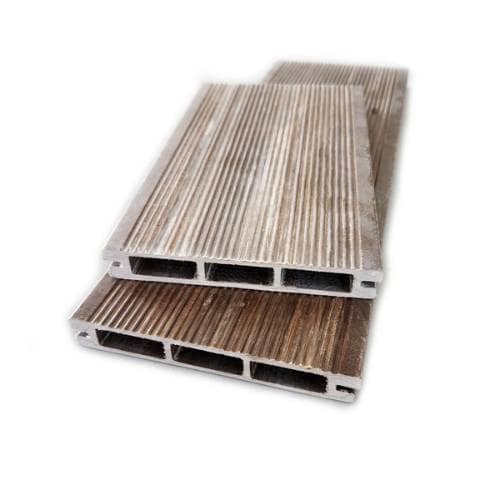
Let me start with what fiberglass decking actually is, because I get this question constantly. We’re talking about glass fiber reinforcement embedded in polymer resin matrices – essentially a composite material that’s engineered at the molecular level for specific performance characteristics.
The magic happens in two ways: pultrusion and molding. I’ve toured manufacturing facilities for both processes, and the engineering is fascinating.
Pultruded Systems: The Performance Champions

Pultruded fiberglass decking is where you see the real engineering prowess. Glass fibers are pulled through a resin bath, then through heated dies that cure the material under pressure. The result? Unidirectional strength and a high strength-to-weight ratio that competes with steel while weighing a fraction as much.
Here’s what I typically spec for demanding applications:
- Tensile Strength: 240-400 MPa longitudinal (that’s roughly 35,000-58,000 psi for our imperial friends)
- Flexural Modulus: 15-25 GPa
- Load Capacity: Up to 14.4 kN/m² at 1-meter spans
- Open Area: 65-75% for drainage that actually works
Molded Panels: When You Need Isotropic Properties
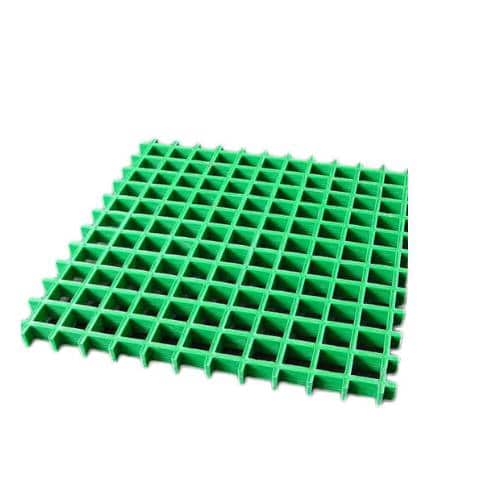
Molded fiberglass decking takes a different approach. The glass fibers are arranged in multiple directions, creating more balanced properties. I recommend these when load directions are unpredictable or when you need more uniform performance.
Key specs I look for:
- Tensile Strength: 120-200 MPa (isotropic)
- Load Capacity: 2.4-9.6 kN/m² depending on thickness
- Standard Sizes: 1220×3660mm, 1220×2440mm
- Open Area: 30-35% standard
For demanding applications, I often specify pultruded grating systems which offer superior strength-to-weight ratios and consistent performance across long spans.
Why I’ve Become a Fiberglass Decking Convert
I’ll be honest – I wasn’t always a believer. Ten years ago, I thought the price premium was unjustifiable. Then I started tracking total cost of ownership, and the numbers changed my mind completely.
The 25-Year Reality Check
Here’s the data that convinced me. I’ve been following installations from 2008, and the results speak for themselves:
Service Life Comparison:
- Wood decking: 10-15 years (if you’re lucky)
- Composite: 15-20 years
- Fiberglass: 25-30 years (still going strong)
But here’s what really matters – the maintenance burden.
Maintenance: Where Fiberglass Wins Big
I track maintenance costs obsessively (occupational hazard), and the differences are staggering:
| Material | Annual Cost/m² | 25-Year Total | My Experience |
|---|---|---|---|
| Wood | $8-15 | $200-375 | Constant headaches |
| Composite | $3-6 | $75-150 | Manageable but ongoing |
| Fiberglass | $0.50-1.50 | $12.50-37.50 | Set it and forget it |
That $187-337/m² lifetime savings? That’s real money that goes straight to your bottom line.
Safety Performance That Actually Matters
I’ve investigated too many slip-and-fall incidents on wet decking. It’s why I’m obsessive about slip resistance data:
Coefficient of Friction (COF) when wet:
- Grit-top fiberglass grating (wet): 0.4-0.6, depending on test method and footwear
- Wood (wet): 0.1-0.3
- Smooth composite: 0.2-0.4
Quality grit surfaces commonly meet or exceed ADA accessible-route requirements when tested dry (COF ≥0.6) and remain significantly more slip-resistant than smooth alternatives under wet conditions. Always verify slip-resistance values against project-specific ADA/OSHA requirements.
Load-Bearing That Engineers Love
When clients ask me about load capacity, I point to the numbers:
- Concentrated loads: 4.5 kN over 50×50mm area
- Uniform loads: 4.8-14.4 kN/m² (span dependent)
- Safety factor: 4:1 minimum for static loads
- Deflection: Limited to L/250 under working loads
I’ve seen 30mm thick fiberglass grating support a loaded forklift without permanent deformation. Try that with wood composite.
When specifying structural applications, I often integrate fiberglass decking with other FRP structural components to create comprehensive systems that outperform traditional materials.
Chemical Resistance: The Real-World Test
Here’s where my chemical plant experience kicks in. I’ve specified fiberglass decking for environments that would destroy other materials in months:
Chemical Performance:
- pH tolerance: 2-12 (depending on resin system)
- Chloride exposure: Excellent with vinyl ester resins
- Solvent resistance: Good to excellent
- Temperature range: -40°C to +80°C standard
The vinyl ester resin systems I specify for marine environments have survived 15+ years of salt spray exposure without degradation.
The Honest Truth About Drawbacks
No material is perfect, and I’ve learned to be upfront about fiberglass decking’s limitations.
The Initial Cost Reality
Yes, fiberglass decking costs more upfront. Significantly more in some cases:
Cost Comparison (installed, per 100 m²):
- Pressure-treated wood: $2,500-4,000
- Composite: $4,500-8,000
- Fiberglass: $7,500-16,000
- Marine-grade fiberglass: $10,000-24,000
But here’s my ROI analysis: break-even typically happens in 7-10 years. After that, it’s pure savings.
Heat Retention: A Solvable Problem
Dark-colored fiberglass can get hot – up to 65°C in direct sunlight. I’ve measured it myself. But this is manageable:
Mitigation strategies I recommend:
- Light colors for high-traffic areas
- Shade structures where possible
- Cooling coatings for extreme climates
Installation Complexity
Some applications need professional installation. Period. Here’s when I insist on certified installers:
- ✅ Spans exceeding 1.5 meters
- ✅ Chemical exposure environments
- ✅ Structural load-bearing applications
- ✅ Marine installations
Complete Material Showdown
I get asked constantly how fiberglass compares to alternatives. Here’s my comprehensive analysis:
| Property | Fiberglass | Composite | Aluminum | Wood |
|---|---|---|---|---|
| Initial Cost ($/m²) | $75-160 | $45-80 | $60-100 | $25-40 |
| Service Life (years) | 25-30 | 15-20 | 20-25 | 10-15 |
| Load Capacity (kN/m²) | 4.8-14.4 | 2.4-4.8 | 8.0-12.0 | 2.4-4.8 |
| Slip Resistance (wet) | ★★★★★ | ★★★★ | ★★ | ★ |
| Chemical Resistance | ★★★★★ | ★★★★ | ★ | ★★ |
| Fire Rating | Class I | Class II-III | Class I | Class III |
| My Recommendation | First choice | Budget option | Special cases | Avoid |
My Installation Protocol
After years of trial and error (and some expensive mistakes), I’ve developed a bulletproof installation process.
Phase 1: Getting the Foundation Right
Critical measurements I insist on:
- Level tolerance: ±3mm over 3-meter span
- Support spacing: Maximum 600mm centers for 25mm thickness
- Load path verification: Don’t assume – calculate
Surface prep that actually matters:
- Remove ALL debris and contamination
- Moisture content <4% for concrete substrates
- Prime with structural epoxy for bonded installations
Phase 2: Material Handling and Layout
I’ve seen too many panels damaged during installation. Here’s what works:
Cutting specifications:
- Diamond blade saw (wet cutting mandatory)
- Carbide-tipped circular saw for small cuts
- Always wear respiratory protection – silica dust is no joke
Understanding the proper pultruded profile applications helps ensure you’re selecting the right material for your specific environment.
Layout strategy:
- Minimize cuts to reduce waste and weak points
- Plan drainage slopes (1:100 minimum)
- Leave 3-6mm expansion gaps between panels
Phase 3: Fastening – Where Most People Screw Up
The fastener selection can make or break your installation:
| Application | My Fastener Choice | Size | Spacing | Torque |
|---|---|---|---|---|
| Standard Commercial | 316 SS Hex Bolt | M8×25mm | 200mm | 15-18 Nm |
| Heavy Industrial | 316 SS Hex Bolt | M10×30mm | 150mm | 25-30 Nm |
| Marine Environment | Super Duplex SS | M8×25mm | 200mm | 15-18 Nm |
Critical fastening details:
- Drill holes 1.5-2.0mm larger than fastener diameter
- Use backing plates for thin substrates
- Apply structural sealant to all connections
- Torque to 60-70% of proof load (no more!)
Phase 4: Quality Control
My final inspection checklist – non-negotiable items:
- [ ] All fasteners properly torqued (use a calibrated wrench)
- [ ] Drainage slopes verified with water test
- [ ] Joint sealants properly applied and tooled
- [ ] No sharp edges or protrusions
- [ ] Load test performed if specified
Maintenance: The “Set It and Forget It” Reality
This is where fiberglass decking really shines. My maintenance protocol is embarrassingly simple:
Monthly Tasks (5 minutes per 100 m²)
- Sweep or blow debris clear
- Remove standing water
- Visual inspection for damage
- Clean spills immediately
Annual Deep Maintenance (2 hours per 100 m²)
- Pressure wash with mild detergent (max 1000 PSI)
- Check fasteners for looseness
- Inspect joint sealants
- Document condition with photos
Specialized Cleaning
When things get messy, here’s my stain removal playbook:
| Stain Type | My Solution | Method | Safety Notes |
|---|---|---|---|
| Oil/Grease | Mineral spirits | Apply, wait 10 min, scrub | Ensure ventilation |
| Rust | 2% Oxalic acid | Apply, wait 5 min, rinse | Gloves and eye protection |
| Organic Growth | 1:10 Bleach solution | Spray, wait 15 min, rinse | Test first, avoid skin contact |
Troubleshooting: Lessons from the Field
I’ve debugged enough failed installations to write a book. Here are the most common issues and my solutions:
Problem: Excessive Deflection
What I see: Visible sagging, bounce when walking
Usually caused by: Support spacing too wide, load miscalculation
My fix: Add intermediate supports at midspan, verify design loads
Problem: Edge Lifting
Symptoms: Corners curling up, wind noise
Root cause: Thermal expansion restriction, insufficient fastening
Solution: Install expansion joints, increase fastener density to 150mm
Problem: Water Ponding
The issue: Standing water after rain
Why it happens: Inadequate slope, blocked drainage
My approach: Adjust support structure, clear drainage paths, add drains
The Economics: Making the Business Case
I help clients justify fiberglass decking investments all the time. Here’s my standard economic analysis:
Total Cost of Ownership (25-Year Horizon)
Initial Investment (per 100 m²):
- Material: $7,500-16,000
- Installation: $2,500-4,000
- Engineering/permits: $500-1,500
- Total initial: $10,500-21,500
Ongoing costs (25 years):
- Maintenance: $1,250-3,750
- Repairs: $500-1,500
- Replacement: $0 (that’s the point!)
- Total ongoing: $1,750-5,250
Compare to wood (same period):
- Initial: $3,500-6,000
- Maintenance: $20,000-37,500
- Replacement (1.5x): $5,250-9,000
- Total wood cost: $28,750-52,500
Net savings with fiberglass: $16,500-26,750 over 25 years
That’s a 40-70% reduction in total cost. The business case writes itself.
Real-World Applications I’ve Specified
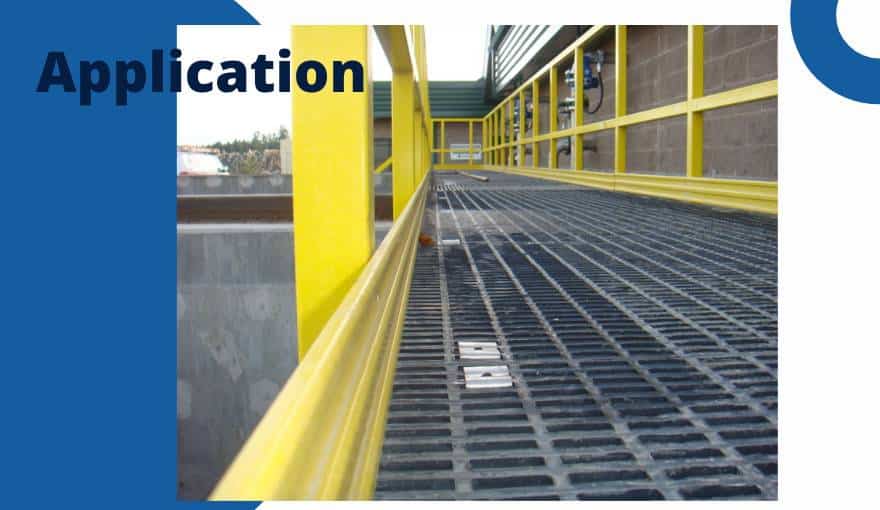
Let me share some specific projects where fiberglass decking solved serious problems:
Marine Terminal Renovation (2019)
Challenge: Salt spray was destroying aluminum grating every 5-7 years
My specification: Vinyl ester resin with C-glass reinforcement
Results after 6 years: Zero corrosion, maintenance costs down 85%
For marine applications, I typically specify components from comprehensive FRP product lines that include complementary structural elements.
Chemical Plant Expansion (2020)
Environment: pH 3-11 chemical exposure daily
Material choice: Epoxy novolac resin system
Performance: No chemical attack documented, safety incidents down 60%
Municipal Water Treatment (2021)
Requirements: NSF 61 certification, biofilm resistance
Solution: Smooth-finish panels with antimicrobial additives
Outcome: Passed all water quality tests, cleaning time reduced 50%
For complex structural requirements, combine fiberglass decking with other pultruded FRP profiles or FRP rebar to create integrated systems. IncomePultrusion manufactures these products on precision pultrusion machines with engineered pultrusion dies.
The Technical Standards You Need to Know
After dealing with countless inspectors, here are the standards I always reference:
Building Code Compliance
IBC requirements I follow:
- Live load capacity: 1.9 kN/m² minimum
- Deflection limits: L/250 under live loads
- Railing attachment: 1.3 kN linear capacity
Fire Safety Standards
ASTM E84 results for quality systems:
- Flame spread: ≤25 (Class I rating)
- Smoke development: ≤450
- Self-extinguishing when flame removed
Safety Certifications
OSHA compliance points:
- Slip resistance per 1910.24
- Worker protection during installation
- Proper PPE requirements documented
Environmental Impact: The Sustainability Story
The environmental argument for fiberglass decking is stronger than most people realize:
Manufacturing energy comparison:
- Fiberglass: 15-20 GJ/tonne
- Steel: 25-30 GJ/tonne
- Aluminum: 45-50 GJ/tonne
Carbon footprint analysis:
- Fiberglass: 2.5-3.0 kg CO₂/kg
- Steel: 4.0-5.0 kg CO₂/kg
- Aluminum: 8.0-12.0 kg CO₂/kg
Factor in the 25-30 year service life, and the environmental benefits compound significantly.
FAQ: Questions I Get Every Week
Q: How long does fiberglass decking really last in marine environments?
A: I have documented installations from 2008 that show zero structural degradation after 17 years. Properly specified vinyl ester systems with UV-stable gel coats consistently deliver 25-30 years in salt spray environments.
Q: Can it handle heavy equipment loads?
A: Absolutely. I’ve spec’d fiberglass grating for forklift traffic (2-tonne capacity), and it performs flawlessly. The key is proper load distribution and adequate support structure. For specialized applications, fiberglass rods and other reinforcement elements can provide additional structural support.
Q: Is fiberglass decking slippery when wet?
A: Not with proper surface specification. Grit surfaces maintain 0.4-0.6 COF when wet, which exceeds ADA requirements. I never specify smooth gelcoat for wet environments.
Q: What about thermal expansion?
A: Fiberglass expands 6-10 × 10⁻⁶/°C longitudinally. For a 10-meter section with 30°C temperature swing, expect 2-3mm movement. I design expansion joints accordingly.
Q: Can I install it myself?
A: For simple overlay applications on level surfaces, yes. But anything structural, spans over 1.5m, or chemical environments requires certified installation. The warranty depends on it.
Q: How do I handle repairs?
A: Individual panels are replaceable without affecting adjacent sections. Minor surface damage (<2mm) can be gel-coat repaired. I always recommend keeping spare panels on-site.
My Bottom-Line Recommendation
After 15 years of specifying decking materials, here’s my honest assessment: fiberglass decking is the smart long-term choice for any application where performance matters more than initial cost.
The engineering is proven, the economics are compelling, and the performance track record speaks for itself. Yes, you’ll pay more upfront. But over 25 years, you’ll save money, reduce headaches, and deliver superior performance.
When I always recommend fiberglass:
- Marine or chemical exposure environments
- High-traffic commercial applications
- Any project with a 10+ year horizon
- Applications where safety is critical
- Situations where maintenance access is difficult
When I might suggest alternatives:
- Extremely tight budgets with <5 year project timelines
- Aesthetic appearance is the primary driver
- Very simple residential applications
The bottom line? Fiberglass decking represents mature technology with proven performance. The material science is sound, the manufacturing quality is excellent, and the economic case is compelling.
If you’re serious about long-term value and performance, fiberglass decking deserves serious consideration. The initial investment pays dividends for decades.
Ready to Make the Switch?
If you’re considering fiberglass decking for your next project, here’s what I recommend:
- Calculate your total cost of ownership over the actual project lifespan
- Specify the right resin system for your environment (vinyl ester for marine/chemical, epoxy for high-performance)
- Plan for proper installation with certified contractors for structural applications
- Design for thermal movement with appropriate expansion joints
- Establish maintenance protocols to maximize service life
The technology is proven, the economics are favorable, and the performance benefits are real. In my experience, clients who choose quality fiberglass decking systems are consistently satisfied with their decision years later.
That’s more than I can say for any other decking material I’ve worked with.
For comprehensive technical resources and additional product specifications, explore the FRP products and pultrusion resources hub or contact IncomePultrusion directly.
Product specs and panel options live on the FRP decking & flooring hub.
Specify fiberglass decking with IncomePultrusion: request a quote for pultruded grating, FRP decking, and complementary structural profiles manufactured to project requirements.

