


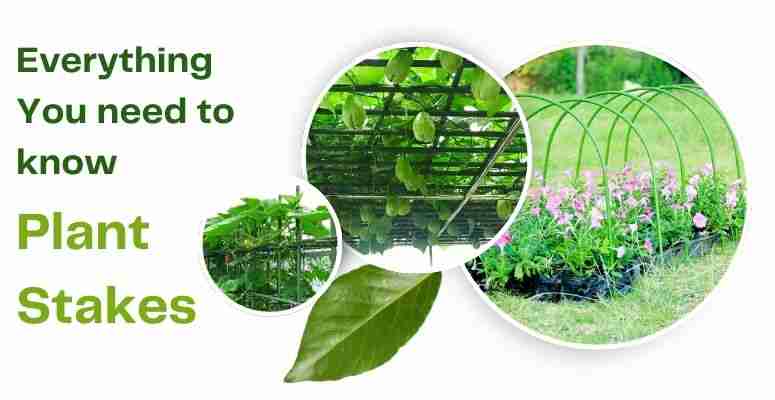
Wooden stakes rot within 2–3 seasons, steel corrodes and conducts electricity, and PVC becomes brittle under sustained UV exposure. Fiberglass plant support stakes eliminate these failure modes through composite construction: continuous glass fiber reinforcement embedded in a polymer resin matrix, pultruded to controlled dimensional tolerances. The result is a stake with tensile strength comparable to steel, the flexibility to deflect under load without fracturing, and a projected service life exceeding 25 years under standard field conditions.
Material Composition and Properties
The structural behavior of a fiberglass stake is determined by the ratio of glass fiber to resin (fiber volume fraction) and the orientation of those fibers relative to the stake axis. Pultrusion aligns the majority of fibers longitudinally, which maximizes tensile and flexural strength along the load direction. Tensile strength in this axis runs 40,000–60,000 PSI (275–415 MPa) for standard E-glass/polyester formulations — comparable to mild steel at 36,000–58,000 PSI, and three to six times higher than wood or bamboo. Specific gravity of 1.5–2.0 g/cm³ puts a typical 6-foot stake at 0.8–1.2 lbs, versus 2.5–4.0 lbs for an equivalent steel section.
The polymer matrix is non-porous, which means no moisture ingress, no freeze-thaw damage, and no pathway for biological attack. UV-stabilized resin formulations prevent surface chalking and polymer chain degradation under prolonged sun exposure. Electrical resistivity is high enough that fiberglass stakes present no shock hazard during electrical storms — a relevant consideration for commercial growing operations with overhead irrigation wiring.
| Material | Lifespan (Years) | Tensile Strength (PSI) | Weight (lbs / 6 ft stake) | Weather Resistance |
|---|---|---|---|---|
| Fiberglass | 25+ | 40,000–60,000 | 0.8–1.2 | Excellent |
| Steel | 5–8 | 36,000–58,000 | 2.5–4.0 | Poor (rust) |
| Wood (Cedar) | 2–4 | 7,000–10,000 | 1.5–2.5 | Poor (rot) |
| Bamboo | 1–2 | 8,000–12,000 | 0.5–1.0 | Poor (splitting) |
| Plastic (PVC) | 3–5 | 3,000–5,000 | 1.0–1.5 | Fair (UV degradation) |
Operating temperature range is −40°F to 200°F without structural degradation, and moisture absorption stays below 0.5% — low enough that freeze-thaw cycling does not cause internal damage. The composite is chemically inert: no leaching of compounds into soil, no pH alteration, and compatibility with USDA organic certification requirements.
Product Types and Specifications
Linear stakes with round or square cross-sections handle the majority of agricultural and horticultural applications. Round profiles distribute stress uniformly under bending loads; square profiles provide higher resistance to twisting when stakes are driven at angles. Our 8-foot fiberglass tree stakes and 12-foot fiberglass tree stakes cover the most common orchard and tree establishment requirements.
U-shaped curved stakes distribute load across two embedment points rather than one, reducing peak soil pressure and improving stability for sprawling or indeterminate growth habits. Standard diameters range from 6 mm to 25 mm; standard lengths from 0.9 m to 4 m, with custom lengths up to 6 m available. Green is the standard color for low visual impact in growing environments; orange and yellow are available where visibility is a safety requirement. Surface finish is smooth as standard, with textured options available where improved grip at tie points is needed. The pultrusion manufacturing process allows precise control over cross-section dimensions for custom orders, with typical minimums of 100–500 pieces and lead times of 2–6 weeks.
Selection Criteria
Diameter selection is driven by the combined bending moment from plant weight and lateral wind load. As a practical starting point: 6–8 mm handles seedlings, herbs, and light annual crops; 10–12 mm covers vegetables and small perennials; 16–20 mm supports fruit trees and large indeterminate vegetables; 25 mm and above is appropriate for commercial orchard establishment and high-wind-exposure sites. For professional-grade tree support, our 10-foot fiberglass tree stakes are rated for 8+ year performance under commercial conditions. Apply safety factors of 2–3× calculated load for general agricultural use, increasing to 3–4× for critical landscape installations where stake failure would cause significant plant or property damage.
Minimum stake length equals 1.2–1.5× the supported plant height, plus embedment depth. Embedment should be 300–450 mm in firm soils; sandy or loose soils require deeper penetration to develop equivalent lateral resistance. Clay soils provide strong lateral support but resist driving — pre-drilling with a soil probe reduces installation effort and avoids stake damage.
Installation Procedures
Clear the installation zone of rocks and debris before staking to avoid deflecting the stake during driving. For established plants, use a soil probe to map root distribution before selecting stake positions — place stakes 50–100 mm from the plant stem to avoid root damage. Drive stakes 300–450 mm deep using a pneumatic driver for volume work or a manual driver for small-scale operations. Tie plant to stake using soft-tie material in a figure-8 pattern: the crossing loop between plant and stake prevents direct contact abrasion while the ties at stake and stem maintain position. Allow enough slack for natural stem movement; rigid attachment causes girdling and wind-load concentration at the tie point. Inspect ties bi-weekly during active growth periods and adjust as stem diameter increases.
Field cutting is straightforward with a fine-tooth carbide blade. Apply masking tape at the cut line to reduce surface splintering, cut at reduced blade speed, and sand edges with 220-grit abrasive to remove any sharp fiber ends. Safety requirements for cutting operations: safety glasses, N95 respirator, and cut-resistant gloves. Fine glass fiber dust requires proper collection and disposal — do not use standard shop vacuums without HEPA filtration.
Applications and Performance Data
In residential settings, 16 mm diameter stakes at 1.8 m length provide adequate support for indeterminate tomato varieties through a full growing season, while 12 mm stakes at 1.2 m cover peppers and most annual vegetables. Greenhouse operations benefit from the non-corrosive properties: steel stakes in high-humidity environments typically show visible rust within one to two seasons; fiberglass stakes are unaffected by condensation or irrigation splash.
Commercial orchard installations use 20–25 mm diameter stakes for tree establishment. The extended service life is the primary economic driver: at a 10–15 year payback period against conventional wood, a single capital purchase covers multiple tree establishment cycles. A 50-acre commercial tomato operation using fiberglass stakes reported a 40% reduction in replacement costs, 15% fewer plant damage incidents attributable to stake failure, and 25% lower installation labor from reduced re-staking frequency, generating approximately $12,000 in annual savings and achieving ROI within 18 months. A 5-acre certified organic operation recorded zero contamination incidents over the evaluation period and maintained USDA organic compliance without additional certification documentation related to staking materials.
Maintenance and End-of-Life
Routine maintenance is minimal. Clean with mild detergent solution annually; avoid abrasive cleaners that can scratch the surface coating and accelerate UV penetration. Inspect for surface cracking, fiber exposure at tips, and any impact damage from cultivation equipment — exposed fiber at impact sites can wick moisture into the composite and reduce local strength over time. Stakes with visible fiber exposure at the embedment zone should be replaced in critical applications. Store removed stakes horizontally on flat supports to prevent warping; avoid stacking heavy loads on top of stored stakes.
End-of-life disposal options remain limited for thermoset fiberglass composites. Standard recycling streams do not accept cured composite materials. Some manufacturers offer take-back programs; industrial applications for ground fiberglass as filler material represent an alternative to landfill. Chemical recycling processes and bio-based resin formulations are under active development but not yet commercially available at scale. The 25+ year service life significantly reduces replacement frequency compared to conventional materials, which is the most practical way to minimize the environmental impact of the disposal limitation. For broader context on fiberglass composite applications and environmental considerations, see our fiberglass composites guide.
Procurement Guide for Commercial Buyers
When evaluating suppliers for volume fiberglass stake procurement, request complete product datasheets with tensile strength, flexural modulus, and UV resistance data per ASTM test standards — not just marketing specifications. ISO 9001 certification indicates a functioning quality management system; ask for product liability insurance documentation and warranty terms, which typically run 5–10 years for quality products. Load capacity charts for the specific diameter-length combinations you intend to use should be available from any serious manufacturer. For large commercial operations, ask for references from established growers operating in similar climate conditions — performance in high-humidity subtropical environments differs from arid high-UV conditions, and supplier experience with your specific application matters.
Volume pricing tiers typically activate at 500–1,000 piece orders. Delivery lead times for standard catalog sizes run 1–3 weeks from domestic distributors; custom sizes require 2–6 weeks from the manufacturer. For related infrastructure composite solutions, see our FRP rebar guide covering construction and infrastructure applications.
Frequently Asked Questions
Are fiberglass plant stakes safe for use with edible crops and organic certification?
Cured fiberglass composites are chemically inert and do not leach compounds into surrounding soil. ASTM testing confirms zero toxic compound release under standard soil contact conditions. The material is compatible with USDA National Organic Program requirements — no additional certification documentation related to staking materials is required. pH monitoring of soils adjacent to fiberglass stakes shows no measurable alteration of soil chemistry over multi-season use.
What diameter fiberglass stake do I need for tomatoes, peppers, and fruit trees?
For indeterminate tomato varieties, 16 mm diameter stakes at 1.8 m length provide adequate support through a full growing season under typical wind conditions. Determinate tomatoes and peppers work well with 12 mm stakes at 1.2 m. Small fruit trees during establishment typically require 20–25 mm diameter stakes, with length determined by the formula: minimum stake height = 1.5× plant height plus 300–450 mm embedment depth. For high-wind sites or commercial operations where stake failure has significant cost consequences, apply a 3× safety factor to the calculated bending load and size accordingly.
How long do fiberglass stakes last compared to wood and steel?
Under standard field conditions, fiberglass stakes have a projected service life exceeding 25 years. Wood stakes (including cedar) typically last 2–4 seasons before rot or splitting causes failure. Bamboo degrades faster, usually within 1–2 seasons in humid environments. Galvanized steel stakes last 5–8 years before corrosion progresses to structural failure, and untreated steel degrades faster. PVC plastic stakes run 3–5 years before UV-induced embrittlement reduces load capacity. The lifecycle cost comparison is significant: despite higher initial cost, fiberglass stakes typically achieve payback within 2–3 growing seasons through eliminated replacement and reduced re-staking labor.
Can fiberglass stakes be cut to custom lengths in the field?
Yes, fiberglass stakes can be cut on-site using a fine-tooth carbide blade. Apply masking tape at the cut line to minimize surface splintering, cut at reduced blade speed, and sand the cut end with 220-grit abrasive to remove sharp fiber ends. The required PPE for cutting operations is safety glasses, an N95 respirator, and cut-resistant gloves. Fine glass fiber dust is a respiratory irritant and requires proper containment — use a HEPA-filtered vacuum rather than a standard shop vacuum. Pre-cut stakes are available in standard lengths from 0.9 m to 4 m, which covers most applications without field modification.
Are fiberglass stakes safe to use near electrical equipment and irrigation wiring?
Fiberglass is an electrical insulator with resistivity several orders of magnitude higher than steel or aluminum. There is no shock hazard from contact with overhead irrigation wiring or electrical equipment during normal use or storms. This property also means fiberglass stakes do not create galvanic corrosion when in contact with metal irrigation components, unlike steel stakes in wet soil environments. For greenhouse applications with extensive electrical infrastructure, the non-conductive property is a practical safety advantage over metal staking systems.
What are the temperature and weather resistance limits of fiberglass stakes?
Standard fiberglass plant stakes maintain structural properties from −40°F to 200°F without degradation. UV-stabilized resin formulations prevent surface chalking and polymer breakdown under prolonged sun exposure. Moisture absorption below 0.5% means freeze-thaw cycling does not cause internal damage — a failure mode common in porous wood and some plastic stakes. In high-humidity greenhouse environments, the non-porous surface prevents the mold and surface degradation that limits steel stake service life in similar conditions.
What maintenance do fiberglass stakes require during and between growing seasons?
Routine maintenance requirements are minimal. During the growing season, inspect ties bi-weekly and adjust as plant stem diameter increases to prevent girdling. Between seasons, clean stakes with mild detergent solution — avoid abrasive cleaners that scratch the surface coating. Before reinstalling stakes, inspect each one for surface cracks, fiber exposure at the tip or embedment zone, and impact damage from cultivation equipment. Stakes with exposed fiber at the waterline or embedment zone should be replaced in critical applications. Store horizontally on flat supports in a covered location; avoid heavy stacking loads that can cause permanent deflection.
What options exist for disposing of fiberglass stakes at end of life?
Thermoset fiberglass composites are not accepted by standard recycling streams. Current disposal options include landfill, industrial reuse as ground fiberglass filler material, or manufacturer take-back programs where available. Chemical recycling processes capable of recovering glass fiber from cured composites are under development but not yet commercially available at scale. Bio-based resin formulations that improve end-of-life options are also in development. In practical terms, the most effective way to reduce the environmental impact of disposal is to maximize service life — the 25+ year lifespan of fiberglass stakes means significantly fewer disposal events compared to annual replacement of wood or bamboo alternatives.
Request a B2B Manufacturing Quote – Share your profile, rebar, machine, or die requirements and we will return specifications, lead time, and export pricing. Contact IncomePultrusion for a project quote.

